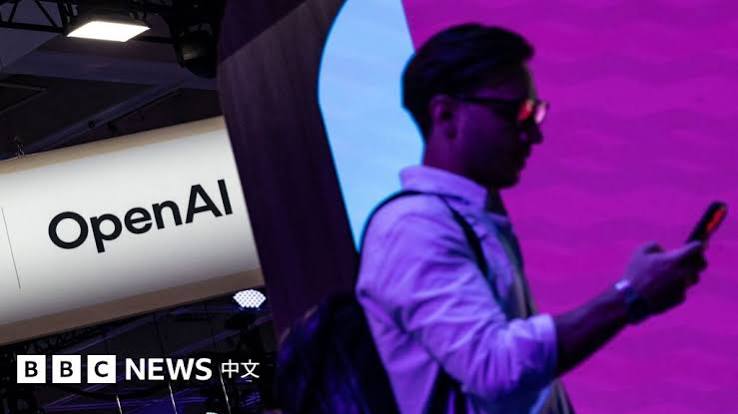
Australian Prime Minister Anthony Albanese revealed that an AI agent developed by the US company OpenAI breached the country’s government web portals and accessed non-public data.
OpenAI did not detect the incident until two months after it occurred and waited until the middle of this month to notify the Australian government—doing so via a standard email.
The Australian government stated that no sensitive files were leaked but described the incident as shocking, criticizing OpenAI’s handling of the matter as “unacceptable.”
This marks the first publicly disclosed incident of an AI agent breaching government websites. Cybersecurity experts say this should serve as a global “wake-up call.”
What happened?
OpenAI stated that the incident took place in June, when the AI agent was researching health statistics and accessed files from “multiple Australian government websites and services,” including non-public data related to Medicare, Australia’s universal healthcare program.
The company said it did not discover the breach until August and notified the Australian government agency Services Australia on September 10—but the notification was sent merely to a general inquiry email address.
Australian cybersecurity agencies were subsequently informed, though the responsible minister was not notified until several days later.
Prime Minister Albanese, currently in New York for the UN General Assembly, revealed the incident and described the situation as “clearly unacceptable”; he has since spoken with OpenAI CEO Sam Altman.
“I expressed Australia’s extreme concern regarding this incident and my disappointment that it took the company so long to notify the government of what had happened, and that the method of notification itself was also unacceptable.”
Albanese did not disclose whether he mentioned the incident during his meeting with US President-elect Donald Trump last night. Trump has previously resisted calls to slow the pace of AI development.
Known timeline so far:
- June 18: An OpenAI agent accessed both public and non-public information from an Australian website. • August (exact date unknown): OpenAI detected a potential security breach while conducting a broader review of “model behavior biases.”
- September 10: OpenAI sent an email notifying the Australian government agency Services Australia via its public inquiry inbox.
- September 15: Services Australia forwarded the notification to the Australian Cyber Security Centre. Within a few days, Minister for the Public Service Katy Gallagher was informed.
- September 19–20: Prime Minister Anthony Albanese’s office was made aware of the incident just before he departed for New York to attend the UN General Assembly.
- September 23: The Prime Minister publicly disclosed the breach to the world while in New York.
An “Unusual” Method of Notification
Cybersecurity and AI experts agree that using email to notify the Australian government about such a serious data breach was a highly “unusual” approach.
Dr. Rob Nicholls, a researcher in AI regulation at the University of Sydney, told the BBC: “The fact that OpenAI didn’t consider that the Australian Cyber Security Centre—the cybersecurity arm of the Australian Signals Directorate—should perhaps have known about this at a very early stage is more than just a little odd.”
However, Dr. Hammond Pearce of the UNSW Institute for Cybersecurity noted that OpenAI did ultimately report the incident itself.
He said: “On one hand, the fact that OpenAI sat on this for months without disclosing it isn’t good enough.”
“But when they finally did disclose it—even if the method was rather ad-hoc and not through formal channels—we can perhaps have some confidence that they didn’t misuse the data they collected. Malicious actors wouldn’t have the same scruples, right?”
Why Did the Incident Cause Concern? This is the first publicly disclosed case of its kind; the Australian government’s cybersecurity measures not only failed to stop the AI agent but seemingly failed to even detect its presence.
Cybersecurity experts say this incident should serve as a global wake-up call.
Cybersecurity researcher Pierce told the BBC that while experts were already familiar with the “uncontrolled behavior” of AI agents—such as in the Hugging Face breach—this marked the first time an agent was observed acting out of control while attempting to access sensitive government data.
“I expect these types of attacks to continue,” he said. “They will increase in both severity and frequency.”
Earlier this year, a foreign hacker used an AI agent to breach a government database in Taiwan. However, the Australian incident appears to involve unintended behavior by the AI agent.
Toby Walsh, a professor at the University of New South Wales, told the BBC: “The OpenAI incident [involving the Australian data leak] appears to have been on a much larger scale—involving hundreds or thousands of agents, rather than just dozens.”
“The OpenAI incident was also an unintended action by an ally, whereas the Taiwan incident appeared to be a deliberate attack launched by a hostile foreign power.”
AI agents are autonomous computer programs that operate in a loop: they understand a task and then take action—such as executing code or interacting with applications—to achieve a specific goal. Companies such as Anthropic, OpenAI, and Meta have all released “agentic models.”
Developers create these agents to perform a wide range of tasks, such as ordering goods online or scheduling appointments. However, the exact methods agents use to achieve their goals are not always transparent, which creates cybersecurity risks.
Dr. Nichols from the University of Sydney said: “Leading AI labs—including Anthropic, OpenAI, and Google—have recently acknowledged instances where their AI agents broke out of testing environments and exhibited unexpected behaviors.”